
|
Getting your Trinity Audio player ready...
|
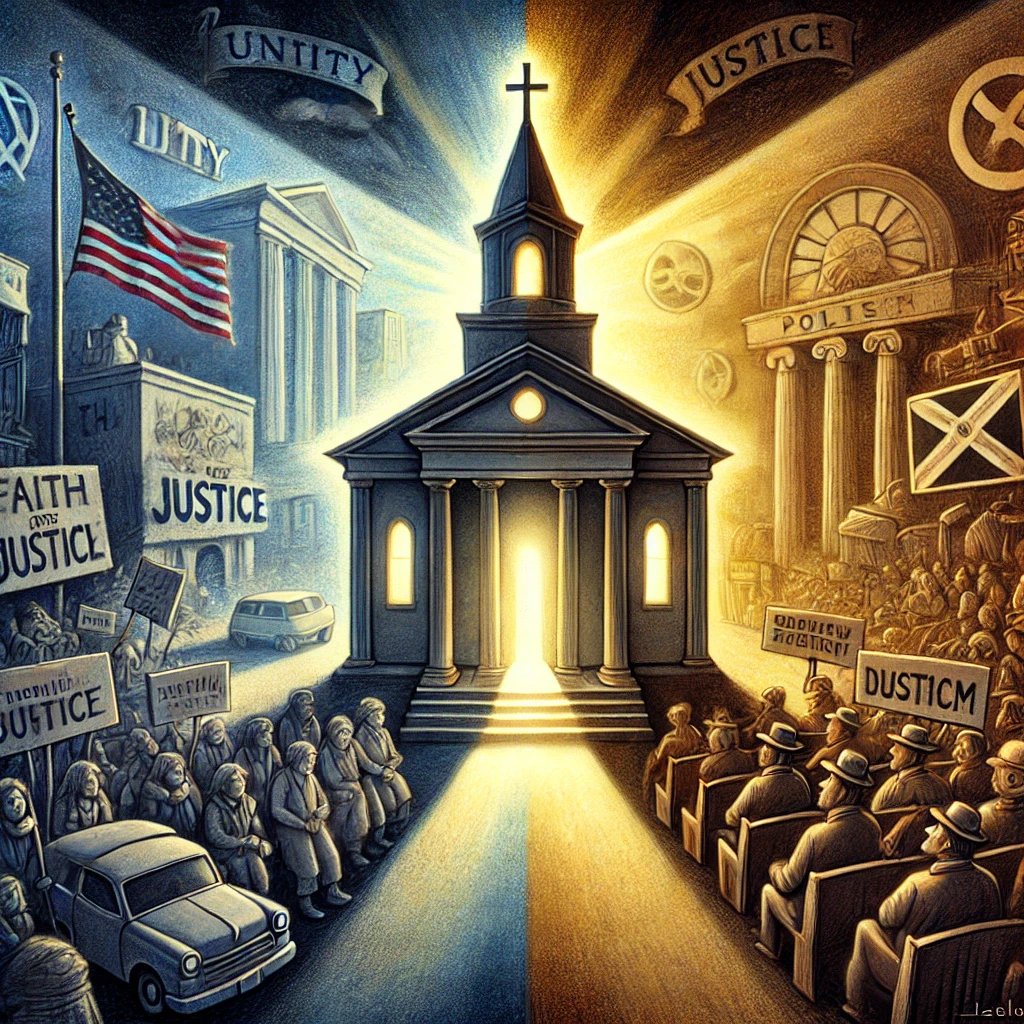
The role of the Church in the political and social sphere has been a topic of debate for centuries. Some argue that the Church should remain completely separate from politics, for fear that this might compromise its witness, discredit the gospel of Jesus Christ or end up supporting political projects that promote hatred, division, racism, insults and moral humiliation, as was seen during the last presidential elections in the United States. Others, however, maintain that the Church has a divine mandate to influence society and political decisions. The truth may lie in a balance between both positions, always guided by biblical principles.
Should the Church be actively involved in politics?
The church has a responsibility to be “salt and light” in the world (Matthew 5:13-16). This includes acting as a prophetic voice that denounces injustice, defends truth, and promotes morality in the public sphere. However, the church’s involvement should not be in partisan politics or involvement with human ideologies, but rather promoting principles that reflect God’s will for justice and mercy. Politics should never become the primary purpose of the church, but neither can it be ignored when the well-being of society is at stake.
Abortion
The biblical position on abortion is clear: human life is sacred and begins in the womb (Psalm 139 verses 13-16, Jeremiah 1 verse 5). Therefore, the church has a duty to advocate for the protection of the unborn, offering support to pregnant women and promoting alternatives such as adoption. This does not only mean condemning abortion, but also showing compassion and help to those facing unplanned pregnancies or emotional crises.
Social justice
The Bible emphasizes justice and mercy as pillars of God’s character (Micah 6:8; Isaiah 1:17). The church must actively work to combat poverty, discrimination, and oppression. This includes addressing systemic issues and offering practical solutions, such as supporting marginalized communities. However, it is essential that the church focus on justice that flows from a heart transformed by the gospel, rather than blindly adhering to secular ideologies.
Immigration
The Bible teaches fair and compassionate treatment of foreigners (Leviticus 19:34; Matthew 25:35). In this regard, the church must advocate for policies that balance national security with human dignity and rights. It also has a responsibility to minister to immigrants, offering material and spiritual aid, reflecting the love of Christ in action.
Conclusion
The Church cannot ignore political and social issues, because these are areas where the principles of the Kingdom of God must be manifested. However, its approach must be transformative and not divisive. Rather than seeking political power, the Church must be a moral and spiritual influence that illuminates the path toward justice, truth and reconciliation, always with an eye toward the gospel of Jesus Christ.